further chem
what is a transition metal?
- a d-block element that forms one or more common oxidation states in the d-subshell
- an element that has an incomplete d-subshell
has magnetic properties:
-
due to quantum spin
-
presence of unpaired electrons in partially filled d-orbitals
-
most metals are paramagnetic
- with unpaired electrons, attracted to magnetic fields
- strength increases with number of unpaired electrons
-
iron, cobalt, and nickel are ferromagnetic
- the magnetic moments of unpaired electrons align spontaneously
- alignment creates magnetic domains, regions in the material where the magnetic moments are aligned in the same direction
-
materials with all electrons paired have no net magnetic moment, and are repelled by magnetic fields
- diamagnetic
-
paramagnetic
- attracted to external field
- unpaired
-
diamagnetic
- not attracted to external magnetic field
- no unpaired
variable oxidation states
and subshell electrons are all similar energy - in compounds, it can a give a few more or a few less and still be stable
oxidation states above +3 exhibit covalent character (bonds with ligands)
+2 and +3 oxidation states shown in all TMs, but +2 more common in later ones (higher ionisation energy)
can act as a catalyst
-
lowers activation energy of a reaction by providing an alternative reaction pathway
-
can lose or gain an electron to change oxidation state, then re-form the original oxidation state
-
can be homogeneous and heterogeneous
-
electrons can be carried around
- electrons from other species can hop into an empty space in an orbital, enabling it to be oxidised, and the electron can hop out of the orbital, allowing another species to be reduced
- electrons from the d-orbital can hop out and reduce another species, then another electron can hop back in to oxidise another species
-
in heterogeneous catalysts, d-electrons on the surface can form temporary bonds with small molecules
-
catalyst provides a surface on which the reactants temporarily become adsorbed and have some bonds weakened sufficiently for new bonds to be created
-
since the bonds between the products and the catalyst are weaker, the products are released
-
in the Haber-Bosch process, finely divided iron acts as a heterogeneous catalyst
-
the reactant gas molecules are adsorbed, their internal bonds are weakened, and held in close proximity to each other
-
the hydrogen and nitrogen molecules and atoms are brought closer together than would be the case in the gas phase, so the rate of reaction increases
for colours, see 3.1.10 coloured complexes (HL)
forms complex ions:
3.4.8 complex ions (HL) non ib

non-IB
note: the coordination number is the number of coordination bonds formed from the ligands to the central ion, not the number of ligands
shape
when CN = 5, complexes often interconvert between triangular bipyramidal and square pyramidal since they are often of similar energy
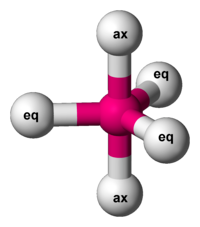
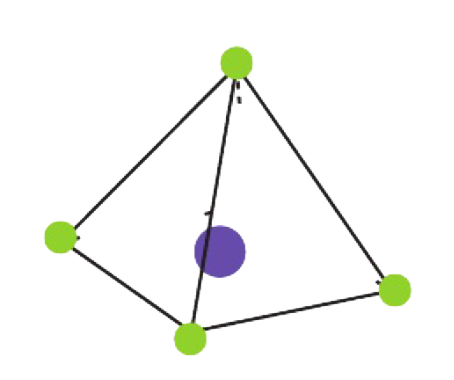
when CN = 4, complexes can take two forms:
-
tetrahedral
generally occurs -
square planar
works for smaller ligands, i.e.
ligands
can be monodentate, bidentate, etc, …, polydentate
- indicates number of lone pairs available to coordinate/bond datively
examples: , , , ,
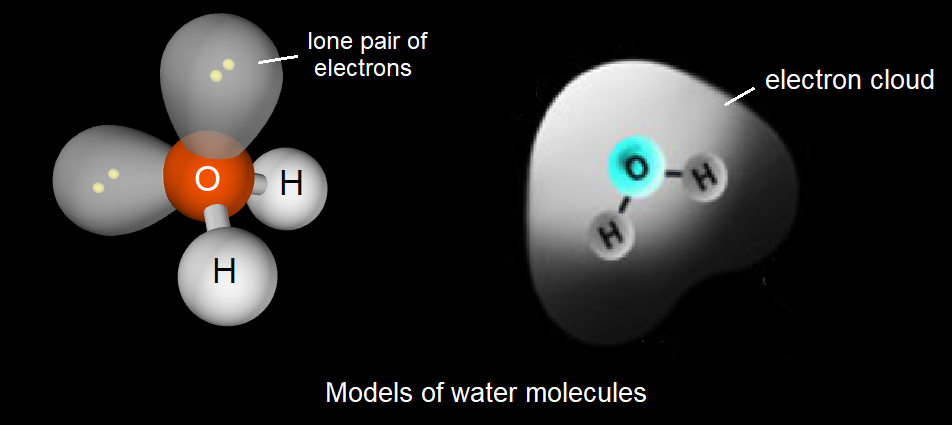
water has 2 lone pairs, but only one is available to coordinate, as:
- the lone pair must face the central ion (when can be seen when drawing lone pairs showing probable space)
polydentate ligands:
- ethane diamine
NCCN- ethanedioate ion
O=C([O-1])C([O-1])=O- EDTA (2,2’,2”,2'''-(ethane-1,2-diyldinitrilo)tetraacetic acid)
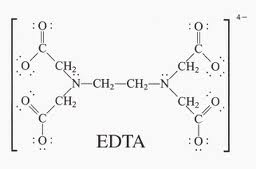
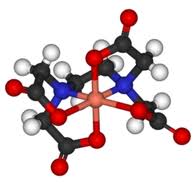
C(N(C(=O)[O-])(C(=O)[O-]))C(N(C(=O)[O-])(C(=O)[O-]))- entropically favourable reaction
- chelate effect: unusual stability of complexes with polydentate ligands
isomerism in TM complexes
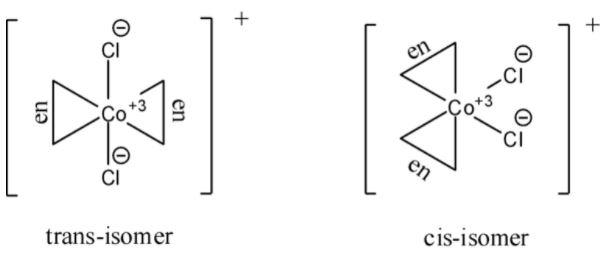
stereoisomerism:
- about spatial arrangement
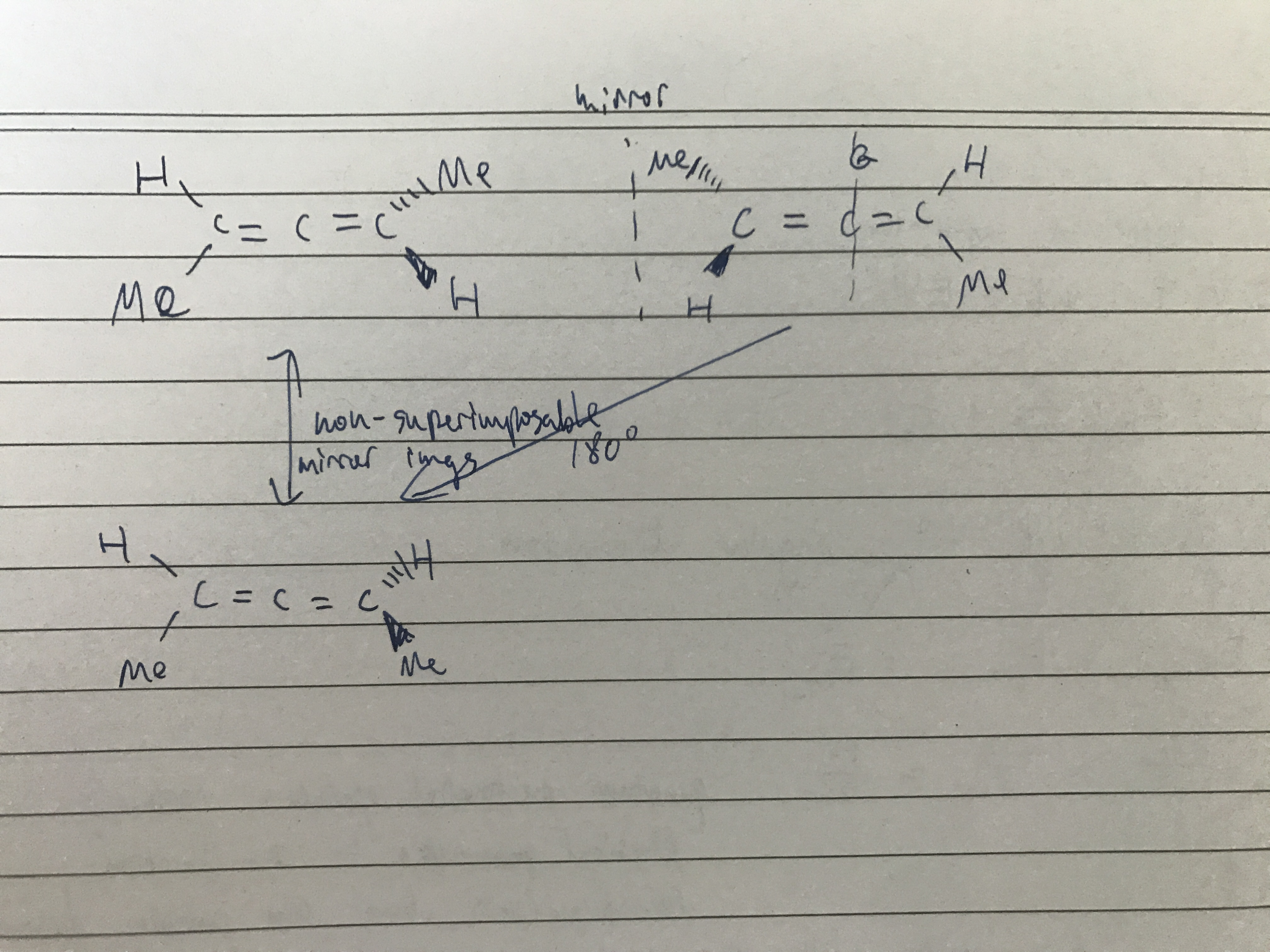
optical isomerism:
- non-superimposable mirror images
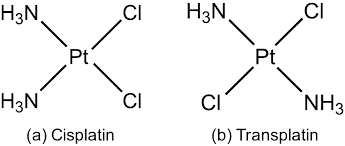
-
cisplatin used in cancer treatment
when thes are on one side, it can react with the DNA, giving the a strong attachment to the double helix on the DNA, stopping the uncontrolled replication of the cancer cell -
thus, transplatin is not effective for cancer treatment
insert photo of demonstrating drawing how optical isomers are non-superimposable
cis: groups on same side
trans: groups opposite (across from each other diagonal)
the d-electron count is:
-
number of d-electrons
-
describes the electron configuration of the valence electrons of a transition metal centre in a coordination complex
-
note: sometimes the s-electrons are included in the d-electron count as they are so close in energy to the d-electrons
required for crystal field theory
d-orbital shapes:
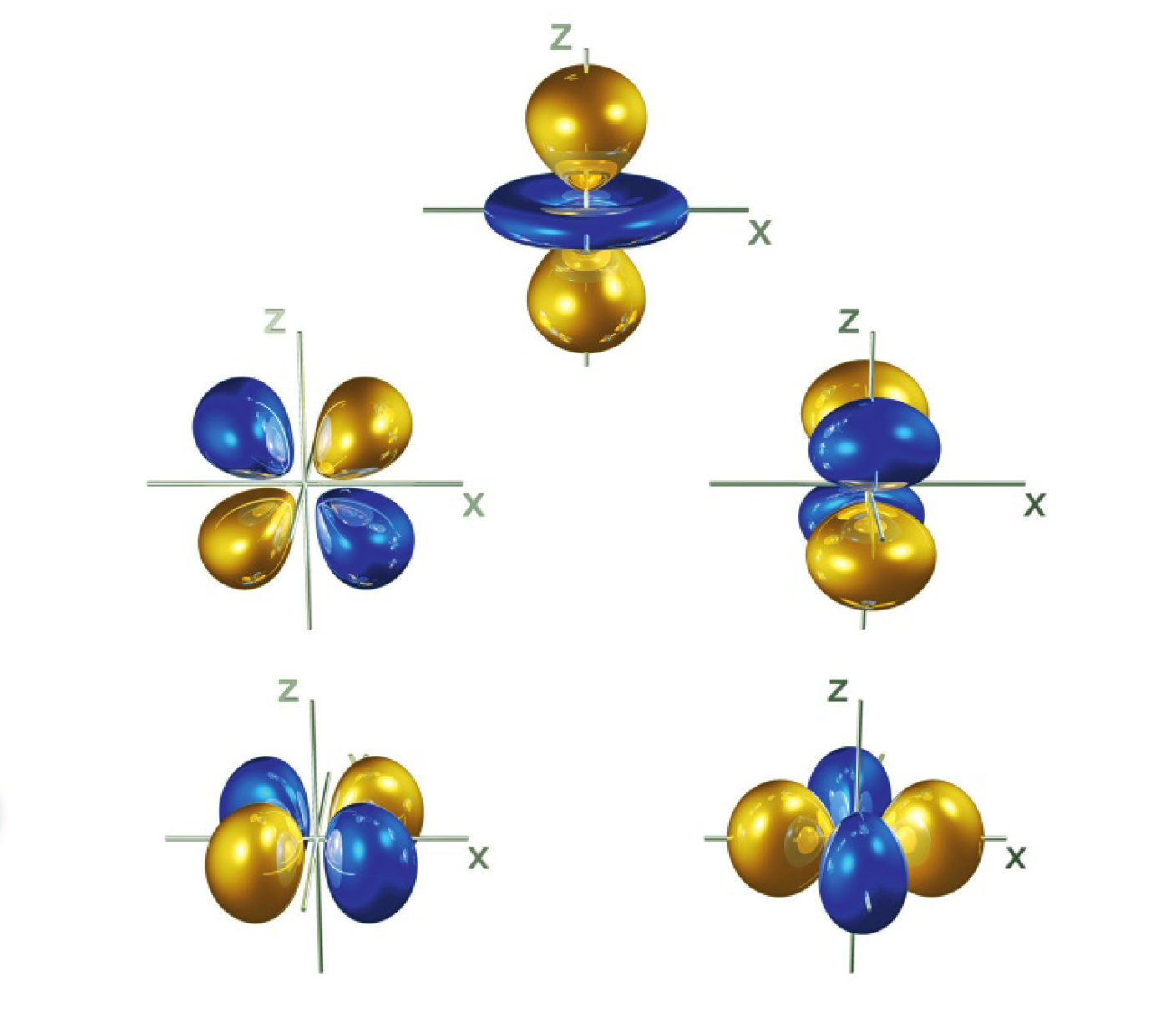
, , - triply degenerate: three of same energy
- never lie on axes
on axes, with donut means doubly degenerate - lies on axes
5 degenerate orbitals slip into higher energy
- quantised energy difference