- sharp
- principal
- diffuse
- fundamental
assumptions:
- valence electrons are spread/delocalised over the entire molecule
- electrons have wave-particle duality, thus exhibiting:
- constructive interference
- destructive interference
linear combination of atomic orbitals (LCAO)
-
adding creates bonding orbital
-
subtraction creates antibonding orbital
-
N molecular orbitals (MOs) are constructed from N atomic orbitals (AOs)
linear combination of atomic orbitals (LCAO)
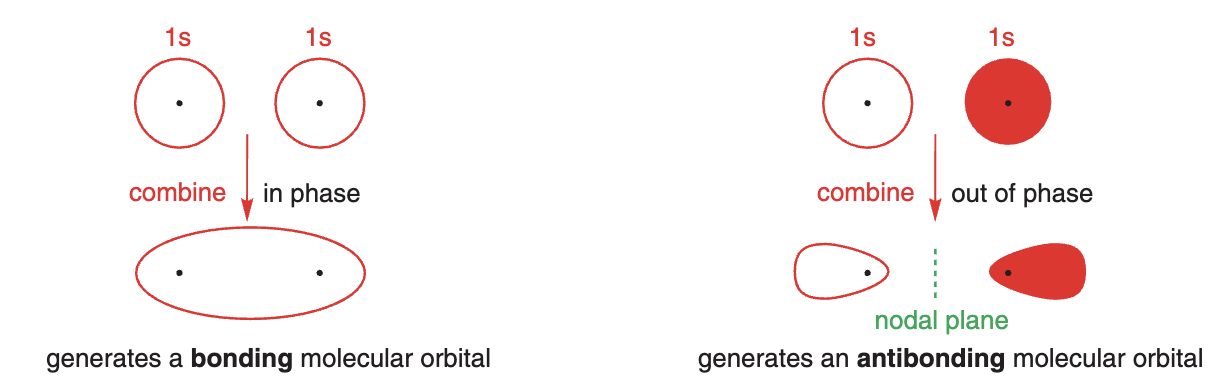
-
the resulting in-phase molecular orbital is shared by both atoms
-
bonding orbitals increases
density in the internuclear region favouring bond formation, creating a force of attraction, binding the two nuclei together -
the resulting out-of-phase molecular orbital has no attractive possibility
-
the electrons are anywhere but between the two nuclei, so the positively charged nuclei repel each other
-
thus forming an anti-bonding MO
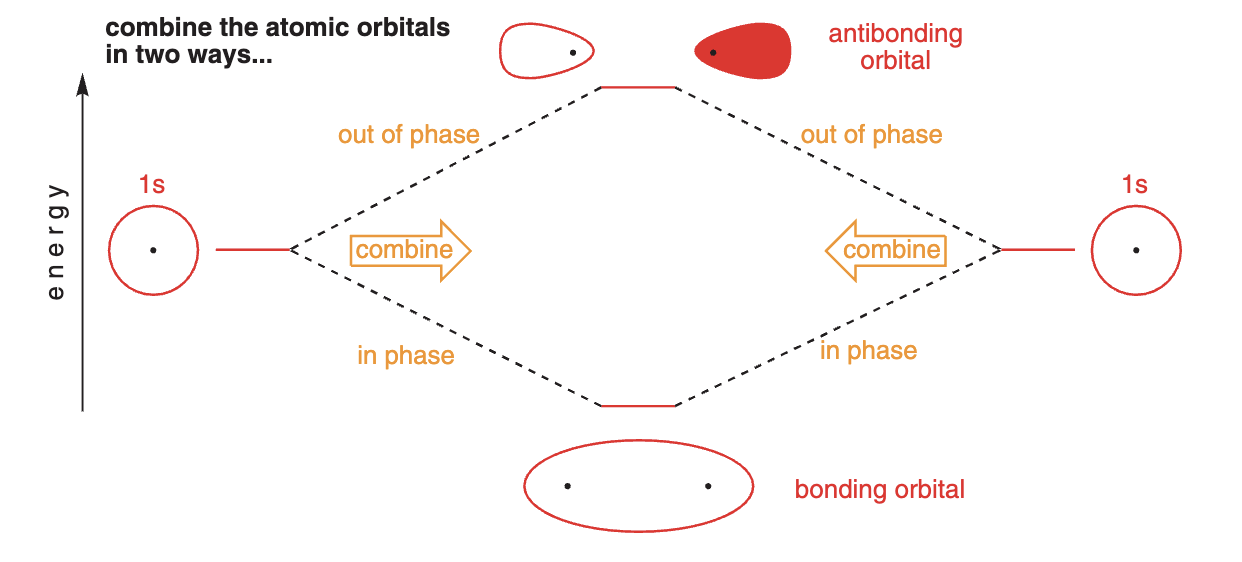
MOs are filled in the same order as atomic orbitals, from lowest energy to highest energy -
bonding MO is lower in energy than AOs
-
antibonding MO is higher in energy than AOs
-
spin of electrons is unimportant
-
since the electrons are in a lower energy state in the MO, it is more stable than the separate atoms, and thus the substance requires energy to be broken apart into its constituent atoms
-
if energy is added, electrons in the low energy bonding orbitals can be promoted to the high energy antibonding orbitals, cancelling the bonding effect
-
thus, atoms can drift apart
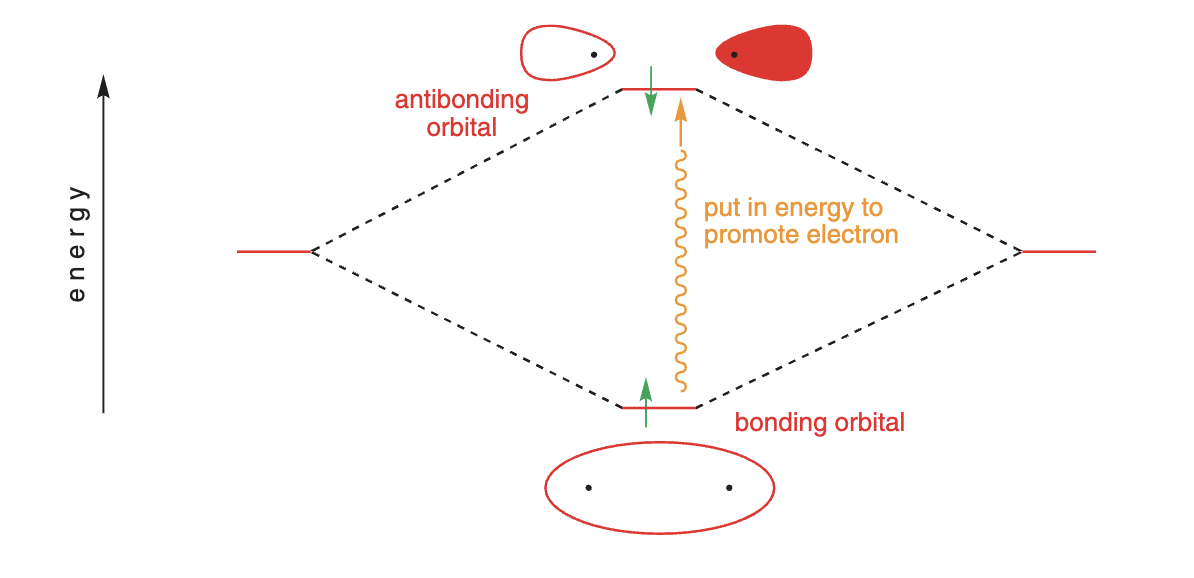
if there are more electrons in bonding MOs than there are in antibonding MOs, there will be bonding
the bond order is the number of bonds between two atoms
.png)
.png)
.png)

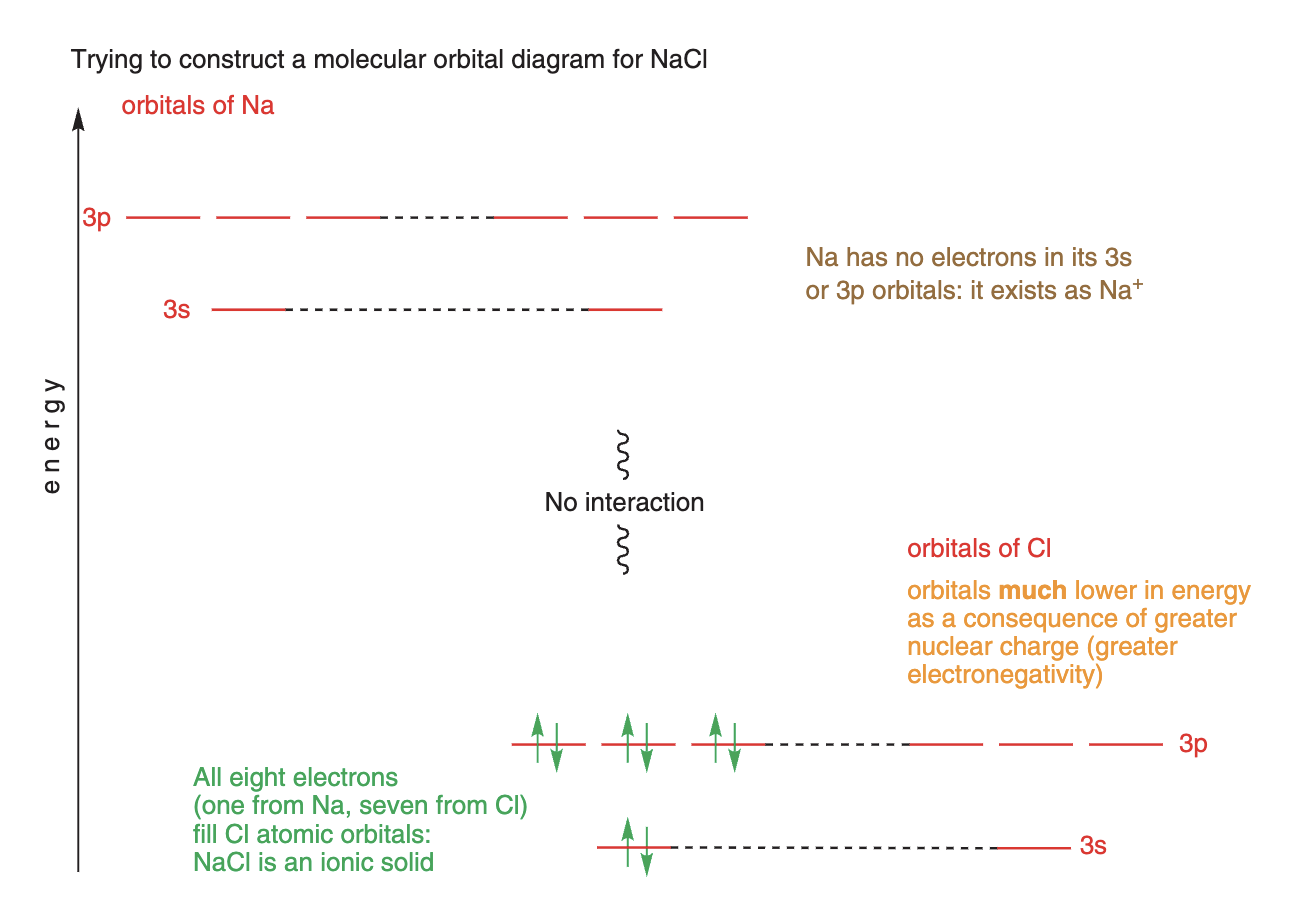
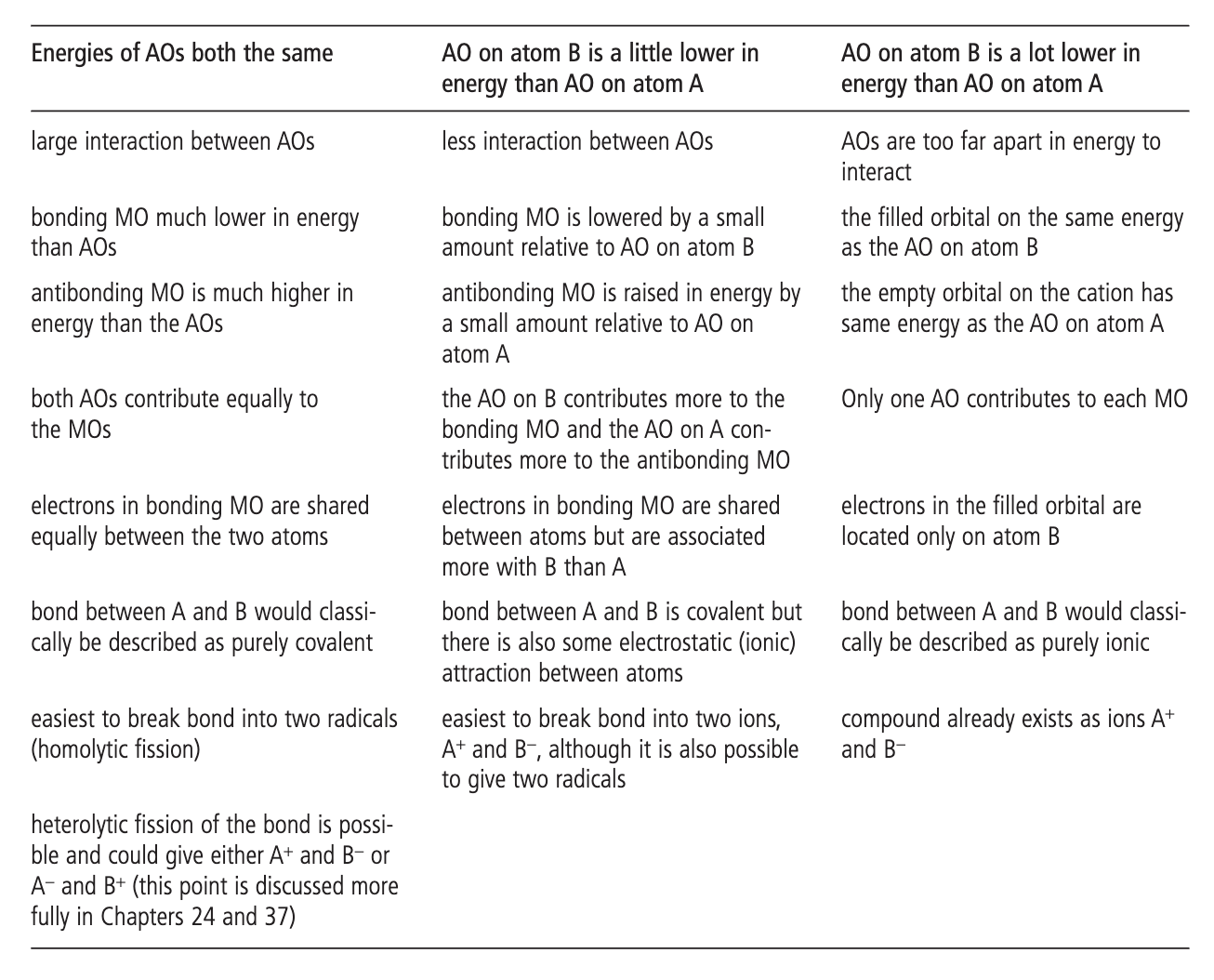
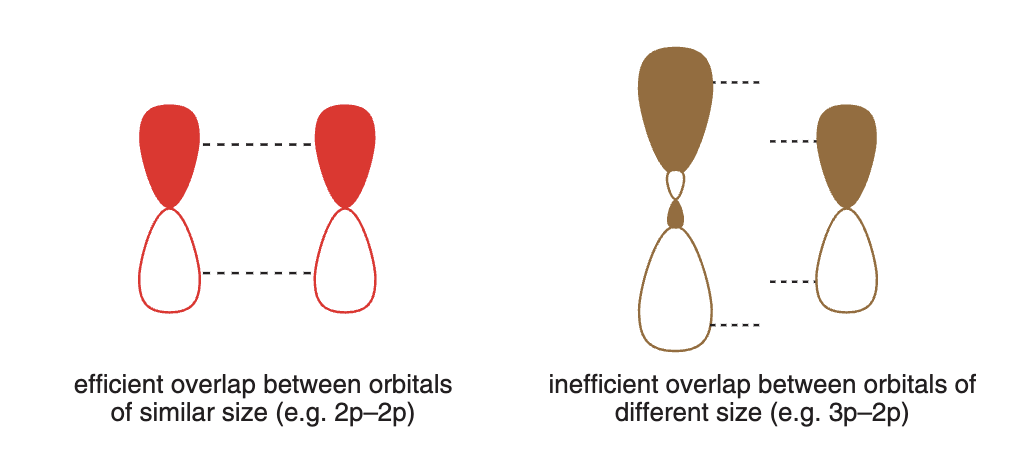
- having similar energies is not the only criterion for interaction between AOs
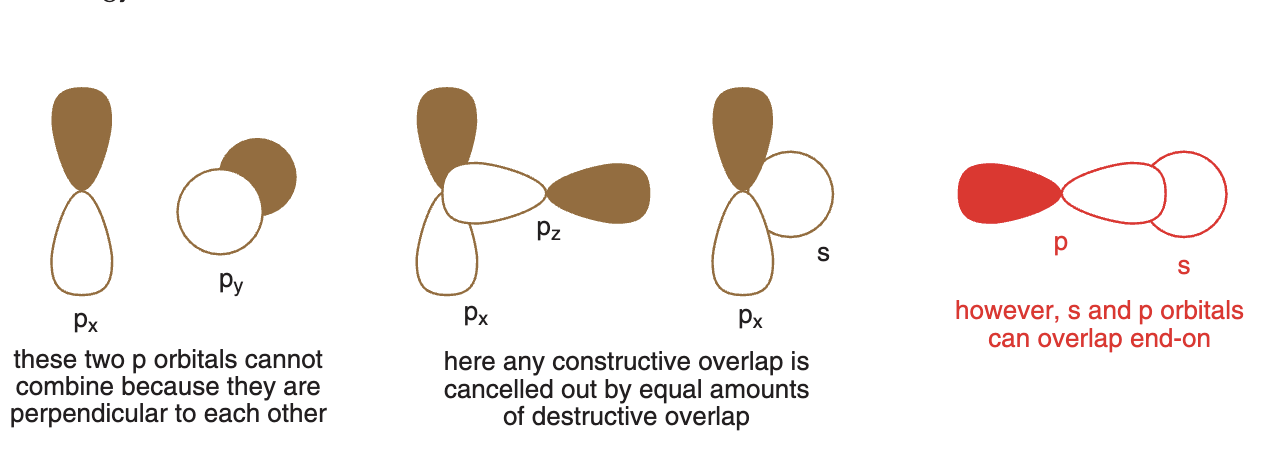
- the spacial interaction matters too
- i.e. similarity in size of orbitals
- symmetry
alignment of atomic orbitals
formation of carbonyl group:
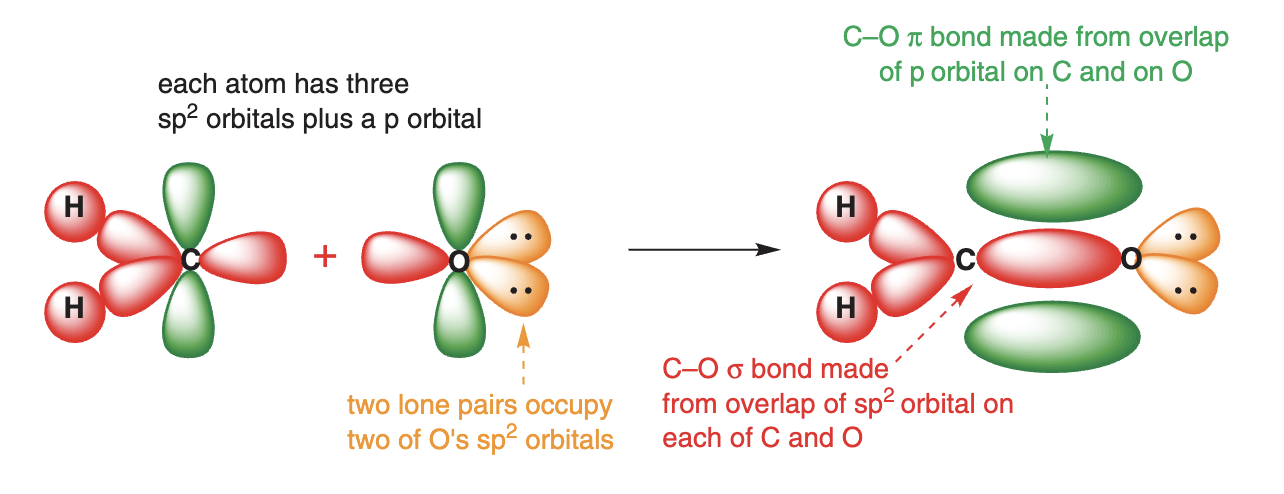
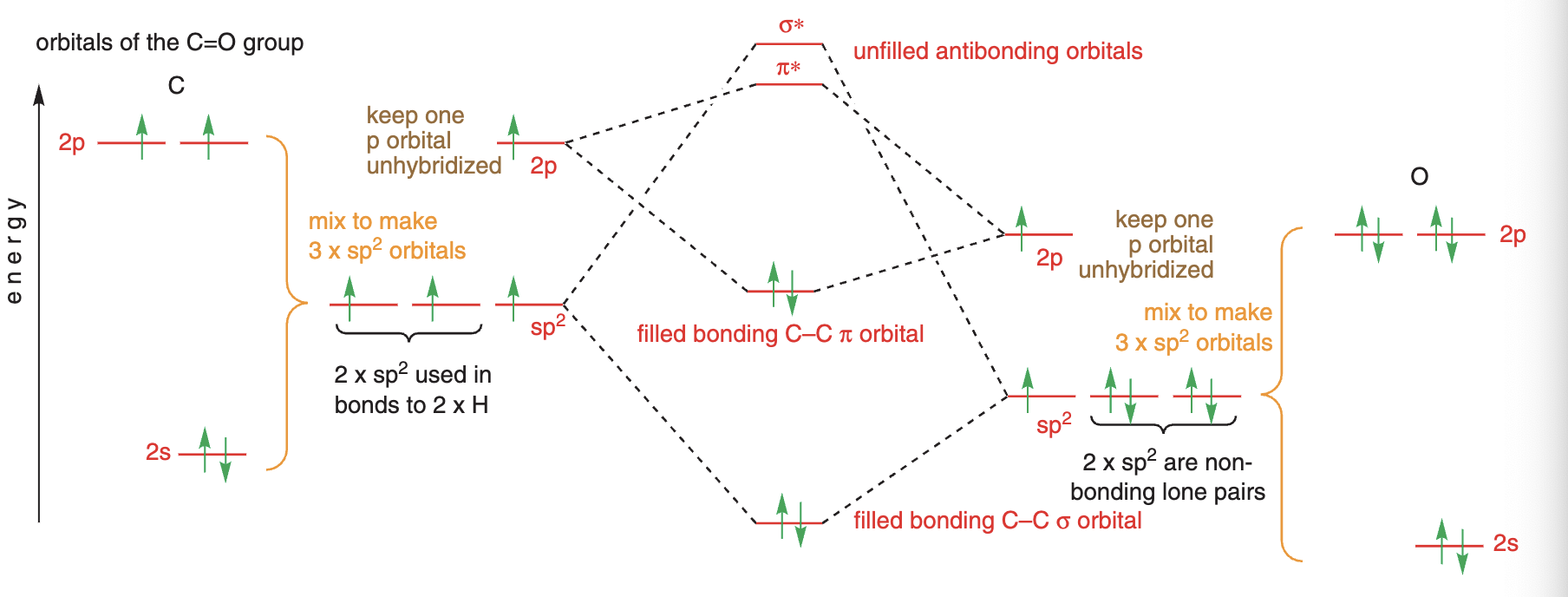
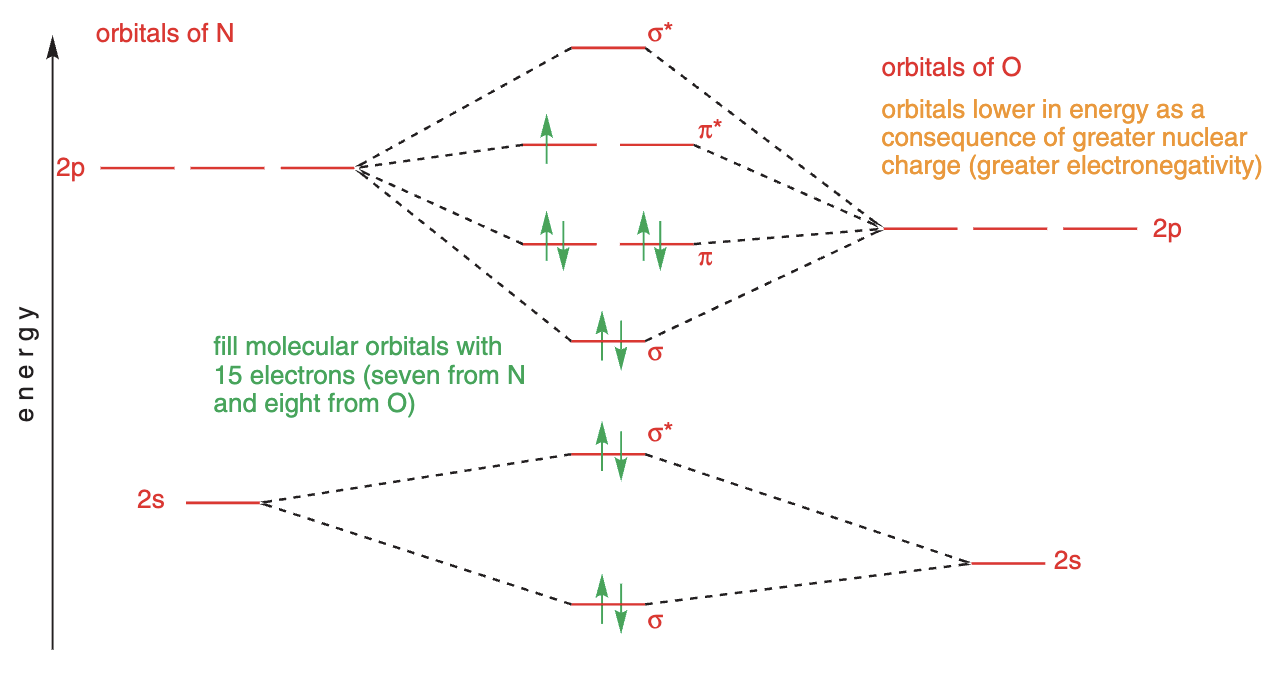
the fact that oxygen is more electronegative:
- makes the energy of the orbitals of a
bond lower than they would be in a - receives a greater contribution from the p orbital on
than p orbital on - thus, the orbital is distorted so that it is bigger at the
end than the end
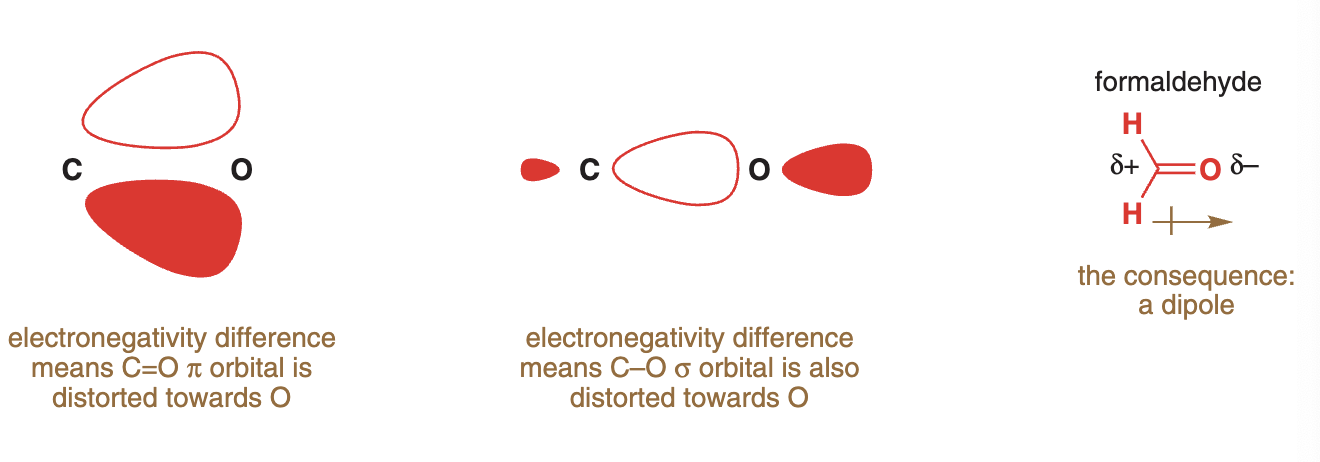
- thus, the orbital is distorted so that it is bigger at the
however, the contribution towards the antibonding pi orbital is more from the p orbital on
- because the p orbital on
is higher in energy
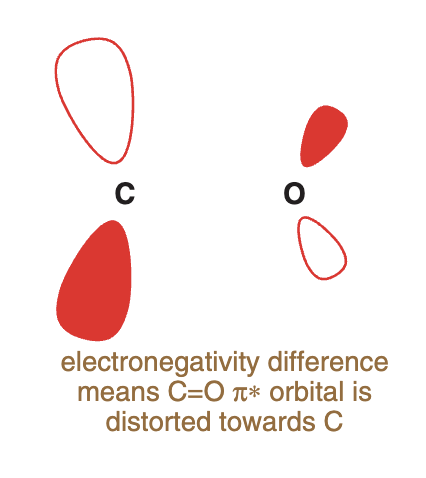
thus, the
effect on reactivity:
- easier to put electrons into antibonding
orbital on end
also answers flexibility of molecule
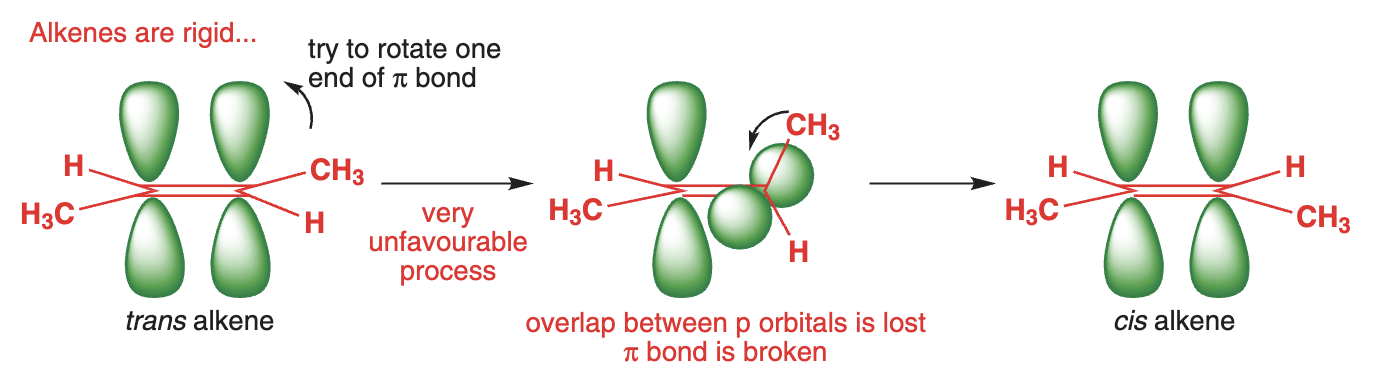
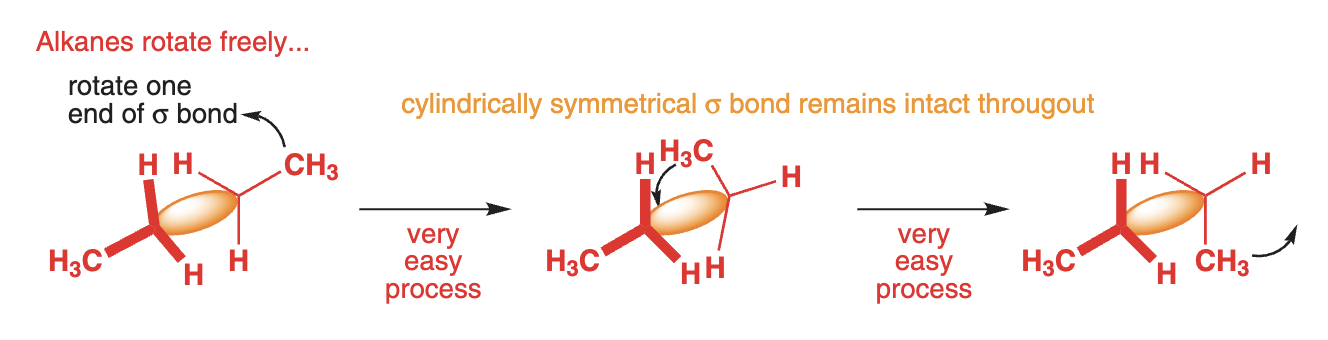
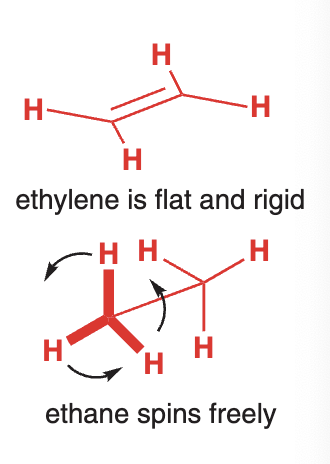
s-p mixing:
- occurs when s and p orbitals have similar energies
- interaction between two orbitals is proportional to
, where is a constant for the overlap - requires overlap and size match
- pushes higher energy
orbitals above orbitals, stabilises orbitals
why s-p mixing does not occur after N2
- s orbitals lowered at a faster rate than the p orbitals, it has greater effective nuclear charge, so distance to nucleus becomes closer
bh3 dimerises because:
- highly electron deficient
- incomplete octet
- sp2 hybridised, with an empty p-orbital