chem whatarethemechanismsofchemicalchange
Reactivity 3.2.16 - electroplating involves the electrolytic coating of an object with a metallic thin layer
electroplating is the process of using electrolysis to deposit a layer of metal on top of another metal or conductive object
an electrolytic cell used for electroplating has the following features:
- the object to be plated (cathode)
- the electrolyte which contains the metal ions which are to coat the object
- the anode (sometimes made of the same plating metal)
- as it is oxidised, it replenishes the ions in the electrolyte which are discharged at the cathode
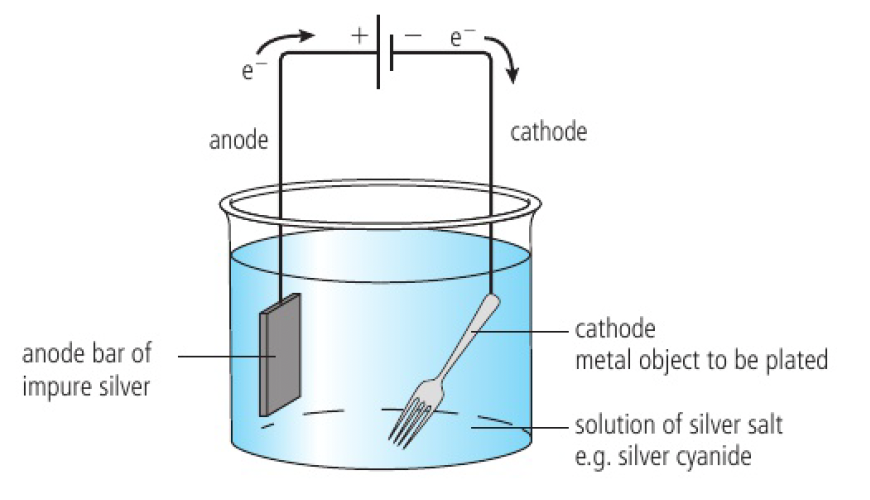
- reduction of the metal ions causes their deposition on the surface of the cathode
- the process can be controlled by altering the current and the time according to how thick a layer of metal is desired
purposes:
- decorative
- corrosion control
- sacrificial protection
zinc is used because it is more active than iron and is preferably oxidised
other metals above it in the activity series can be used, but they are too reactive
e.g. Ca(s) is explosive, and Al(s) doesn’t last long enough
- sacrificial protection
galvanised iron
- improvement of function
- with harder wearing materials (ie chromium)